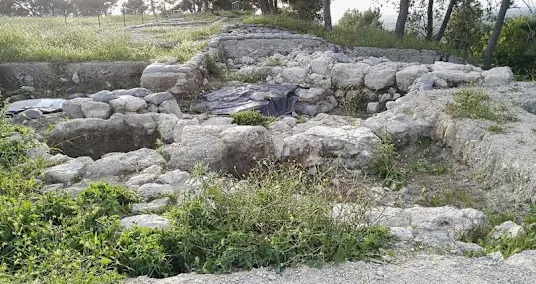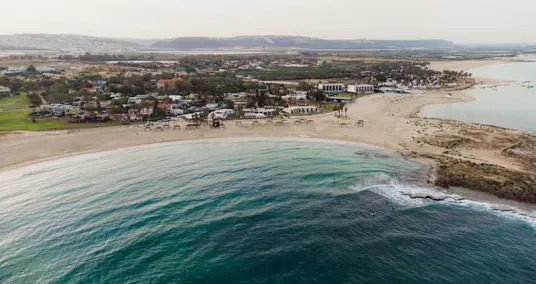
The discovery was made in an ancient shipwreck in the Dor Lagoon near the Carmel Coast, where archaeologists recovered nine pieces of unprocessed iron known as “blooms.”
Researchers from the University of Haifa said Wednesday that an underwater excavation off Israel’s northern Mediterranean coast uncovered what they described as the earliest known cargo of raw iron transported by ship, dating back around 2,600 years, Xinhua reported.
The discovery was made in an ancient shipwreck in the Dor Lagoon near the Carmel Coast, where archaeologists recovered nine pieces of unprocessed iron known as “blooms.” According to the university, the find provides direct evidence of how iron was transported in its earliest commercial stages.
The material was preserved in its original form, having solidified directly in a smelting furnace without undergoing forging or further refinement. Researchers said this distinguishes the cargo from later iron artifacts that typically show signs of shaping or tool-making.
Unlike copper and bronze, which could be melted into liquid form in ancient production processes, iron was heated with charcoal to produce a solid, porous mass. That mass was generally hammered to remove impurities and create denser material suitable for tools and implements.
The recovered blooms showed no indication of that secondary processing stage, suggesting they were transported immediately after production.

Earliest iron shipment discovered in ancient Mediterranean wreck
To determine the age and condition of the cargo, researchers conducted microscopic and chemical analyses.
Radiocarbon dating was also carried out on charred wood embedded in one of the pieces, helping confirm the timeline of the shipment. The findings were published in the journal Heritage Science.
Researchers said the cargo indicates that iron was being moved in raw form from production sites to other locations for further processing, pointing to a level of specialization in ancient manufacturing and trade networks in the Mediterranean.
The University of Haifa said the discovery provides new insight into early iron production and distribution practices in the region.
LATEST POSTS
- 1
 Do you lean your seat back on the plane? These travel pros — and real-life couple — won't do it.
 - 2Manual for Tracking down Spending plan Agreeable Travel Objections
- 3Israeli forces kill one person in series of attacks on southern Lebanon
- 4People who talk with their hands seem more clear and persuasive – new research
- 5Andrew McCarthy's awe-inspiring image of a skydiver in front of the sun


- Two UN peacekeepers killed in explosion in Lebanon
- Illumina unveils dataset to speed up AI-powered drug discovery
- Intriguing Strange Cruising Objections you Should Visit
- Moon memorial: Artemis 2 astronauts name lunar 'bright spot' after mission commander's late wife
- The Manual for Well known rough terrain Vehicles
- Metropolitan Greatness: The 6 Urban areas for Quality Living in 2024
- Administrative building in Sharjah region targeted by Iranian drone, UAE authorities announce
- Ancient mass grave discovered in water cistern during Tel Azekah excavations
- German inflation soars to 2.7% in March as Iran war drives up prices